The Labor Department has announced that it received over 6 million jobless claims in one week, significantly higher than the previous week's record-setting 3.3 million. I joined CBS This Morning to weigh in on what the latest report means for the U.S. economy and what out-of-work Americans can do to help themselves and their families.
Retail giants Macy's, Kohl's and Gap have announced widespread furloughs amid soaring reports of coronavirus cases in the U.S. The pandemic has sent the economy into free fall, with massive layoffs and small business closures happening across the country as a result of precautions to slow the disease's spread. I joined CBS This Morning to talk about this latest hit to workers and what it means for the future of the economy as the pandemic continues.
New unemployment claims for the most recent measured week totaled 3.28 million. Facing an unprecedented event, the government is taking unprecedented measures as America's economy hits the crisis stage. But there are also firms that are hiring in response to the pandemic. Here’s my piece for CBS Sunday Morning.
The CARES Act, signed into law on Friday, is the largest economic stimulus package in history. The bill allocates $2.2 trillion to people and businesses negatively impacted by the coronavirus’ effects on the economy. I joined CBS This Morning: Saturday to explain if and how the stimulus will affect you.
New details surrounding the coronavirus pandemic and its impact on the economy come every day. CBS This Morning assembled a panel of experts, including yours truly, to answer viewers' most pressing questions to make sure you have the information you need to navigate the new normal.
More than 3 million U.S. workers filed for unemployment last week, making it the worst week for unemployment claims in over 50 years. Over half of all U.S. states have ordered nonessential businesses to close, putting millions more at risk of being laid off or not working enough hours to survive. I joined CBS This Morning to put the numbers into context.
The Senate's $2 trillion coronavirus relief package is expected to pass sometime Wednesday before being sent to the House. The historic bill is designed to help workers and businesses affected by the damage the coronavirus pandemic is causing the economy, including people who have already lost their jobs as a result. I joined CBS This Morning to talk about what that means for you.
As the global economy enters an unprecedented shutdown during the coronavirus outbreak, I talked with Nobel Prize-winning economics expert Joseph Stiglitz; Michael Goodman, president of the investment management firm Wealthstream Advisors; and Jake Dell, owner of New York City's venerable Katz's Delicatessen, about weathering the economic storm. I also spoke with improv actor Ed Herbstman, whose Magnet Theater, shuttered by the pandemic, is now being forced to improvise.
In this video I chat with Nobel Prize-winning Columbia University professor Joseph Stiglitz about how efficiencies in our economy, aimed at increasing short-term profit, have made us more vulnerable in the crisis we face today with the COVID-19 pandemic.
The COVID-19 pandemic has created tremendous economic uncertainty. In this video I talk with Michael Goodman, president of the investment management firm Wealthstream Advisors, about how people should strategize when considering dipping into their retirement savings.
The Dow and NASDAQ’s Friday closing numbers marked the end of U.S. markets’ worst week since the 2008 financial crisis. The economic fallout has also lead to massive layoffs and predictions of an unprecedented slowdown. I joined CBS This Morning: Saturday to break down the latest financial information.
Nationally, unemployment claims are skyrocketing. The federal government is trying to put a band-aid on the financial bleeding, working to send out stimulus checks of $1,000 per adult and $500 per child.
The New York Stock Exchange will temporarily close its famous trading floor on Monday after two people tested positive for the coronavirus. Trading is set to resume electronically. On Wednesday, the Dow closed below 20,000, erasing nearly all its gains since President Trump took office. I joined CBS This Morning with reaction to the extreme economic uncertainty.
Coronavirus fears led to another terrible day for stocks Monday, amid growing concerns the world may be headed into a new recession. Consumer spending makes up 68% of the U.S. economy. I joined CBS This Morning with some tips on how everyday people can cope with the financial uncertainty.
Wall Street is hoping to rebound Tuesday after Monday's historic losses, but traders still worry about the long-term impact of the outbreak. Some finance experts are fearing the coronavirus pandemic could lead to a recession. I joined CBS This Morning to explain where the U.S. economy stands, and who could be impacted the hardest.
Financial markets suffered losses of historic proportions Monday, with the Dow falling almost 3,000 points, the biggest one-day point drop of all time. The tumble comes as President Trump concedes the country "may be" heading for a recession. Here’s my report for the CBS Evening News.
The stock markets ended a brutal week on a positive note. The Dow bounced back by nearly 2,000 points, picking up more than 9% on Friday. Here’s my report from the CBS Evening News.
In a recent survey, 53% of Americans said they do not have emergency funds to cover a significant amount of time without a paycheck. Although President Trump has proposed a payroll tax cut to ease the burden, one finance expert says that won't help people who are most struggling from the coronavirus shutdowns, hourly employees. I joined CBS This Morning to talk about the economic effects of the ongoing public health crisis.
The Dow plummeted nearly 10%, leaving investors fearing that the government has not done enough to help the economy amid the coronavirus pandemic.
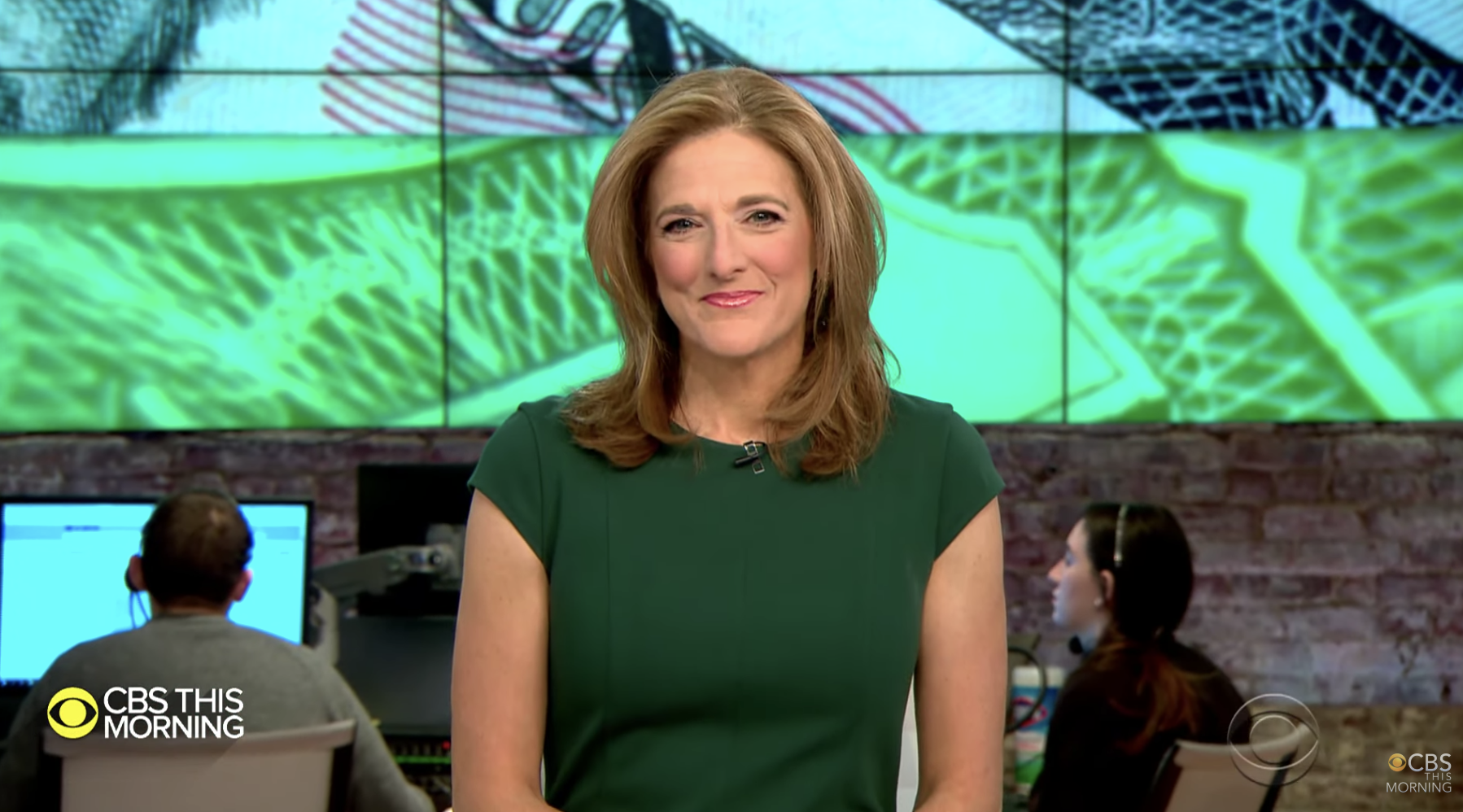
The stock market appears to have recovered slightly from Monday’s historic coronavirus-related losses. The DOW Jones industrial average saw its largest single-day point drop in history, with the biggest percentage-wise selloff since the 2008 economic crisis. I joined CBS This Morning to share advice about what the numbers could mean for personal investors.