Posts in Blog
Behavioral Economics or Why We’re Bad Investors

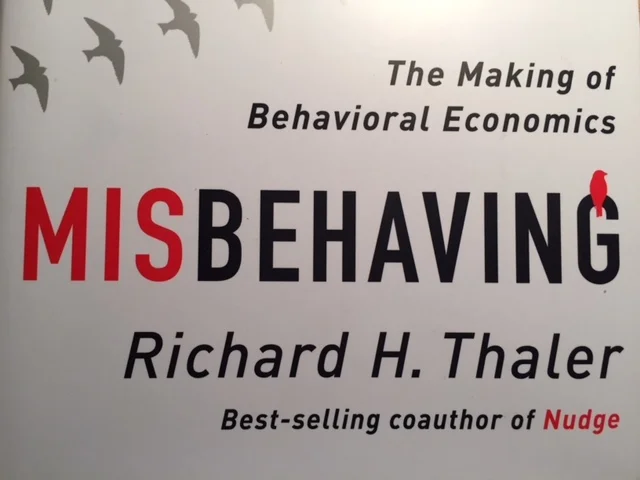
The 2017 Nobel economics prize has been awarded to Richard Thaler of the University of Chicago for research on behavioral economics, which shows how our emotions can impact economic decision-making, as well as our investment performance. Thaler’s body of work has built on that of Israeli psychologists Daniel Kahneman and Amos Tversky, who forty years ago showed the ways in which the human mind systematically erred, when forced to make judgments in uncertain situations. 

Read More


September Jobs Report Needs an Asterisk

Hurricanes Irma and Harvey blew across the labor market, as employers shed 33,000 jobs in September. Yes, it was the first negative reading on payrolls in seven years, but until we have the subsequent few months’ reports, it’s hard to read too much into the results. (As a note, Puerto Rico is NOT included in the BLS report.) The Labor Department said that the storms likely contributed to “a sharp employment decline in food services and drinking places (-105K) and below-trend growth in some other industries.” 

Read More
Republican Tax Plan: How Does it Affect ME?

The Republican tax plan is out and you may be wondering, “How does this affect me?” Unfortunately, the details are scant. Before determining the impact on individuals, corporations and the nation’s balance sheet, the following questions must be resolved:

Read More
Fun with FAFSA

Forget the goblins of Halloween or even the fact that many of the big stock market crashes occur during the month. Now there is yet another reason to dread the spooky month of October—it’s time to complete the dreaded the Free Application for Federal Student Aid or FAFSA form. Of course I am only slightly exaggerating, but as of October 1, families will be able to start the process of applying for college funding for students attending school in academic year 2018-2019. FAFSA is the gateway document because it is used to determine how much students and their families will receive in terms of college grants, scholarships and loans.

Read More
Caregivers Need Care

Non-professional family caregivers shoulder a huge burden. According to research from the Transamerica Institute, many “are providing care at their own risk.” Across a diverse population, 55 percent of respondents “say that their own health is taking a back seat to the health of their care recipient,” while a whopping 69 percent gave “little or no consideration to their own financial situation when deciding to become a caregiver.” While the vast majority of caregivers (87 percent) are caring for a family member, the demographic breakdown of the group is changing: 53 percent are women and 47 percent are men, spread across a variety of age groups and income levels.

Read More
Republican Tax Plan: 12 Questions

Senate Republicans are expected to unveil their tax plan this week and while we don’t yet know the details, the rumors are that there will be $1.5 trillion in tax cuts over the 10-year budget window. Even days before the announcement, lawmakers are divided on some key issues. In a surprise move, Republicans are reportedly considering maintaining the top income tax bracket of 39.6 percent, which applies to ordinary income above $470K for married filing jointly (MFJ) and $418,400 for single filers. Earlier this month, the President said, “the rich will not be gaining at all with this plan…the wealthy will be pretty much where they are…If they have to go higher, they’ll go higher, frankly.” 

Read More
Equifax Fall Out

The fall out from the Equifax data breach is mounting. Frustrated consumers, who can’t access web sites or get a human being on the phone, are angry and bewildered, are left wondering: How can these companies have so much power with so little accountability?

Read More
Equifax Data Breach: What to do

Here we go again: Another massive data breach, reminding us how vulnerable we are to thieves seeking our personal information and identity. Last week, credit monitoring company Equifax announced that a “Cybersecurity Incident” had exposed names, Social Security numbers, birth dates, addresses and, in some cases, driver's license and credit card numbers, from a whopping 143 million Americans. “Incident” sounds a little tepid for the magnitude of this event, but more critically, consumers who were instructed to go to the Equifax emergency web site, equifaxsecurity2017.com to determine if their information had been compromised, ran into a brick wall: After entering the required information, people could not get confirmation about whether or not they were affected. 

Read More
More Financial Vegetables: Life Insurance

I've been spooning out a healthy portion of financial planning vegetables in the aftermath of Hurricane Harvey. Now that we have covered the ins and outs of navigating the property insurance claims process, it's time for another helping of what’s good for you…because it’s Life Insurance Awareness Month! I know people really don’t like to think about this topic. But not addressing this cornerstone of planning can leave your heirs with big financial problems. According to the 2017 Insurance Barometer Study, conducted by Life Happens and LIMRA, while 84 percent of respondents agree most people require life insurance, only 70 percent said they themselves needed coverage. 

Read More